

Ever searched a word and found ten different meanings? That is exactly what happens with pulsamento. Some pages call it a rhythm. Others treat it like pulse, pulsation, or a modern label for recurring patterns in music, science, art, and digital culture. That mix sparks curiosity fast. Readers want one clear answer.
The confusion also makes the topic interesting. Pulsamento sounds expressive, almost familiar, yet it sits somewhere between beat, tempo, cadence, oscillation, and waveform. You may see it linked to heartbeat, BPM, frequency, heart rate variability, or even 60–80 pulsations per minute. So, is it a real term, a stylized idea, or online hype? Let’s use simple language to explain it. Then you can judge what it really suggests today.
What Is Pulsamento?
The term pulsamento can feel confusing at first glance. Different websites explain it in different ways, which makes it harder to pin down. So, let’s start with a clean, simple answer before diving deeper.
A Simple Definition
At its core, pulsamento is commonly used to describe a rhythmic pulse or a repeating pattern. It reflects a sense of steady movement, like a beat, a vibration, or a recurring flow over time. Think of it as the feeling behind a pulse or pulsation, not necessarily a strict technical term.
In everyday usage, it often points to:
- A steady beat in music
- A recurring signal or oscillation in systems
- A natural rhythm found in movement or sound
How It Is Used Today
Today, pulsamento appears across multiple contexts. You might see it linked to:
- Music: describing tempo, cadence, or BPM-driven rhythm
- Science: referring loosely to frequency, waveform, or periodic motion
- Biology: connected to heartbeat, pulse rate, or heart rate variability
In simple terms, pulsamento acts as a flexible label for anything that follows a repeating, pulse-like pattern across different fields.
Is Pulsamento a Real Word or a Web-Created Hype Term?
This is the question most readers are really asking. The term sounds technical and familiar at the same time. But once you dig deeper, the answer is not as straightforward as it seems.
The Reality Behind the Term
The idea behind pulsamento is absolutely real. It connects closely to well-established concepts like pulse, pulsation, and rhythm, which are used in music, biology, and physics. These ideas are measurable and widely accepted. For example, heartbeat, BPM, and frequency are all grounded in real-world data.
However, the word pulsamento itself is not strongly recognized as a formal dictionary meaning in standard English usage. Compared to terms like pulsation or oscillation, it appears less frequently in academic or technical sources.
Why It Feels Like a Hype Term
So why is pulsamento everywhere online? The answer lies in modern content trends.
- It sounds expressive and unique
- It blends ideas like cadence, beat, and recurring pattern
- It works across music, science, and digital culture
Some pages even present it as a brand, experience, or online trend, which adds to the confusion.
The Balanced View
In simple terms, pulsamento is best seen as a modern, flexible label built around real concepts, rather than a strictly defined technical term.
Pulsamento Origin: Where the Term Seems to Come From
Understanding where pulsamento comes from helps clear up a lot of confusion. The word may feel modern, but its roots point to something much older and well established. Let’s trace that path step by step.
The Linguistic Root
At the core, pulsamento connects to the Latin verb pulsare, which means “to beat,” “to strike,” or “to throb.” This root gave rise to several familiar words, including:
- Pulse
- Pulsate
- Pulsation
All of these share the same idea: a repeated rhythmic movement or vibration. In science and daily life, this can relate to heartbeat, oscillation, or any form of steady recurring pattern.
Connection to Other Languages
In Italian, the standard term is pulsazione, which directly means pulsation. It is used in both medical and physics contexts, such as describing frequency, waveform, or periodic motion measured in units like rad/s.
This suggests that pulsamento likely follows a similar linguistic pattern, even if it is not as formally recognized. It carries the same core idea of a pulse-driven rhythm across different contexts.
Pulsamento vs Pulse vs Pulsation vs Beat vs Tempo
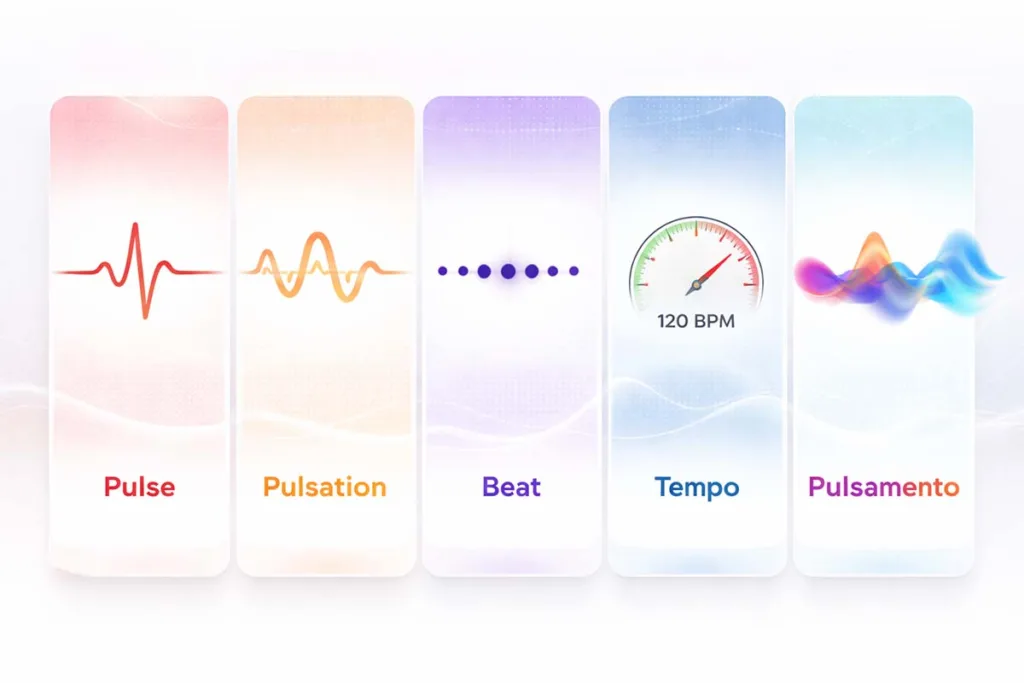
These terms often appear side by side, which creates confusion. They sound similar, but each one has a distinct role depending on context. Understanding the differences helps you use pulsamento more accurately.
Key Differences Explained
Here is a simple breakdown:
- Pulse → A physical or natural throb, like a heartbeat or arterial movement. It is often measured as pulse rate or beats per minute.
- Pulsation → A more formal, scientific term. It describes repeated rhythmic variation, often linked to oscillation, frequency, or wave motion.
- Beat → The basic unit in music. It is what you tap your foot to.
- Tempo → The speed of that beat, usually measured in BPM. Faster tempo means quicker rhythm.
- Pulsamento → A broader, flexible label. It suggests a pulse-like rhythm, recurring pattern, or flowing cadence across different fields.
Why This Comparison Matters
The key difference is precision. Terms like pulse, pulsation, and tempo have clear definitions in science and music. In contrast, pulsamento works more as a descriptive bridge. It captures the feeling of rhythm, movement, and periodic variation without strict technical limits.
Pulsamento in Music: Rhythm, Cadence, and Sonic Flow
When people use pulsamento in a musical sense, they are usually pointing to how sound moves. It is less about strict theory and more about the feeling of flow. Think of it as the energy behind the rhythm, not just the structure.
How Pulsamento Connects to Music
In music, pulsamento often reflects the underlying pulse that keeps everything together. It links closely with:
- Beat → the steady unit you follow
- Tempo → the speed, often measured in BPM
- Cadence → the natural rise and fall of phrases
- Syncopation → shifting accents that create movement
You can notice this in guitar playing, especially styles like flamenco, where plucking patterns and percussive sounds create a strong rhythmic pulse.
Beyond Structure: The Feel of Sound
More than anything, pulsamento captures musical flow. It shows how melody, harmony, and rhythm interact over time. In spoken word or performance, it can describe how voice and timing shape listener response.
In simple terms, it is the living rhythm inside sound.
Pulsamento in Science and the Body: From Heartbeat to Waveforms

Outside music, the idea behind pulsamento shows up clearly in science and the human body. Here, it connects to real, measurable patterns. These are not abstract ideas. They can be tracked, recorded, and analyzed with precision.
Pulsamento in the Human Body
In biology, the closest match is the pulse you feel in your wrist or neck. This reflects the heartbeat, often measured as 60–80 pulsations per minute at rest. It also links to:
- Heart Rate Variability (HRV)
- Respiration And Breathing Cycles
- Blood Flow Through Arteries
These patterns form a natural rhythm that keeps the body stable. Even brain activity shows neuraloscillation, which follows repeating cycles over time.
Pulsamento in Science and Technology
In physics and engineering, similar ideas appear as oscillation and waveform behavior. Systems often rely on:
- Frequency (cycles per second)
- Angular frequency measured in rad/s
- Periodic signals in electronics and communication
From signalprocessing to digital systems, these repeating patterns drive how information moves.
In simple terms, the concept behind pulsamento mirrors how both nature and technology operate through steady, repeating motion.
Why So Many Articles Use Pulsamento So Broadly Today
If you look at recent blogs, you will notice something quickly. The term pulsamento is used almost everywhere, but not always in the same way. That is not random. There is a reason behind this wide usage.
The Rise of a Flexible Digital Term
Modern content favors words that feel expressive and adaptable. Pulsamento fits that pattern well. It blends ideas like rhythm, pulse, cadence, and recurring pattern into one flexible label. Because of that, writers apply it across:
- Music and creative rhythm
- Science concepts like oscillation and frequency
- Digital culture, branding, and content trends
It also sounds unique, which helps with visibility and search interest.
Why This Creates Confusion
The downside is clarity. When one word covers waveform, heartbeat, and artistic flow, meanings start to overlap. That is why readers often see mixed definitions and inconsistent explanations online today.
So, Is Pulsamento Real or Hype? The Honest Verdict
After looking at different angles, the answer becomes clearer. The confusion is real, but so is the idea behind the term. What matters is how you interpret it.
Pulsamento is not pure hype, but it is not a strict technical term either. The core idea comes from real concepts like pulse, pulsation, rhythm, and oscillation. These are measurable in BPM, frequency, and natural cycles like heartbeat.
At the same time, the word itself is used more loosely online. It acts as a modern label for recurring patterns and flowing cadence across fields.
In short, pulsamento is a real concept with flexible meaning, shaped by modern usage.
FAQ Section
Is pulsamento a real dictionary word?
Not in a strong, formal sense. You will rarely find pulsamento in standard dictionaries compared to pulse or pulsation. However, it appears widely in modern content as a descriptive term linked to rhythm and recurring patterns.
What does pulsamento mean in music?
Pulsamento in music refers to the underlying pulse that propels a composition. It connects with beat, tempo, cadence, and BPM. It describes how sound flows over time, especially in styles like guitar or flamenco.
Is pulsamento the same as pulsation?
Not exactly. Pulsation is a more established term used in science and medicine. Pulsamento is broader. It often blends ideas like oscillation, rhythmic movement, and expressive flow.
Does pulsamento relate to science?
Yes, indirectly. The concept overlaps with measurable ideas like frequency, waveform, angular frequency, and signals measured in rad/s. It also connects to biological rhythms like heartbeat and heart rate variability.
Why is pulsamento trending online?
It is flexible and expressive. Writers use it across music, digital culture, and creative fields, which increases visibility but also creates mixed meanings.
Conclusion: What Readers Should Take Away
By now, the picture is much clearer. Pulsamento is not just a random buzzword, but it is not a strict technical term either. It sits in the middle. The meaning draws from real ideas like pulse, pulsation, rhythm, and oscillation.
What makes it unique is flexibility. You can see it in music through beat, tempo, and BPM, or in science through frequency, waveform, and even rad/s. It also connects to natural patterns like heartbeat and recurring cycles. In simple terms, pulsamento reflects a pulse-like flow across different fields, shaped by modern usage.
For more insightful articles, please visit Techroyall.