
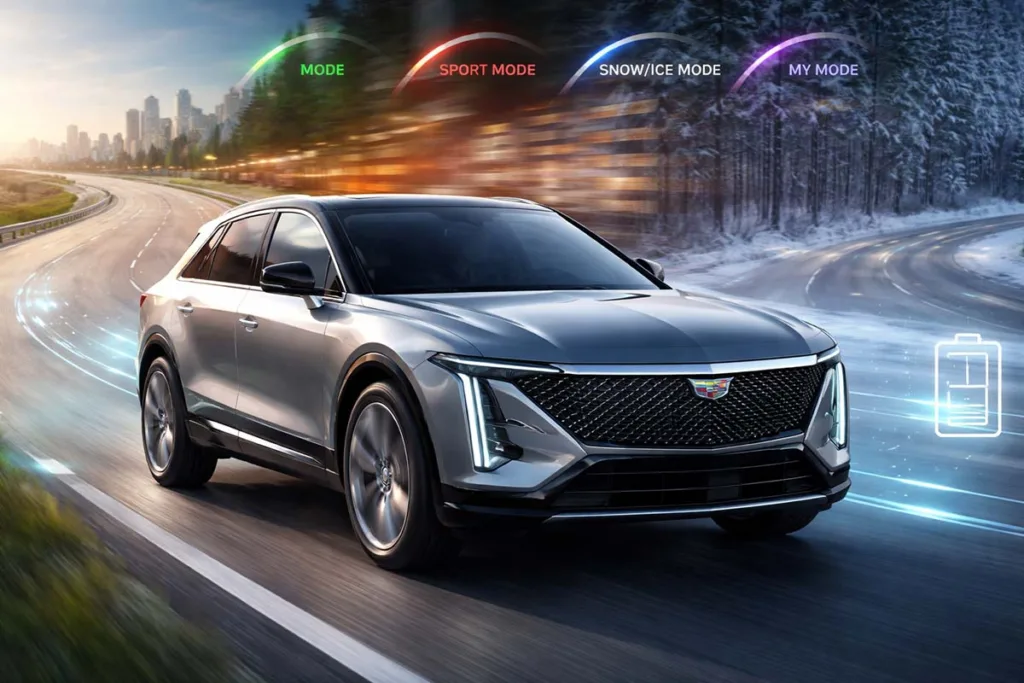

Wondering if switching modes in your EV actually saves battery—or just feels different? In the Cadillac LYRIQ, driving modes do affect how energy is used, but not the battery itself. The SUV still runs on the same 102 kWh battery pack, whether you choose Tour Mode, Sport Mode, Snow/Ice Mode, or My Mode.
What changes is energy consumption. Tour Mode keeps things smooth and efficient, helping you get closer to the EPA-estimated 326 miles range (RWD). Sport Mode increases power output and torque delivery, which raises battery drain. Snow/Ice Mode limits throttle response for stability, keeping energy usage steady.
So yes, driving modes in the Cadillac LYRIQ influence real-world range, not battery capacity.
Understanding How Cadillac Lyriq Uses Battery Power
To understand range differences, you need to separate battery size from how energy is used. Many drivers mix these up. In reality, your Cadillac LYRIQ keeps the same battery, but usage changes based on driving behavior.
Battery Capacity vs Energy Consumption
The Cadillac LYRIQ comes with a 102-kWh battery pack. This number represents total stored energy, not how quickly it drains. Whether you drive in Tour Mode or Sport Mode, the capacity stays fixed.
What changes is energy consumption:
- Higher power demand = faster battery drain
- Smoother driving = better energy efficiency
How This Impacts Real-World Range
Range depends on how efficiently energy is used. For example:
- Up to 326 miles EPA-estimated range (RWD)
- Around 319 miles (AWD) due to higher electricity consumption
So, same battery. Different outcomes.
Cadillac Lyriq Driving Modes Explained
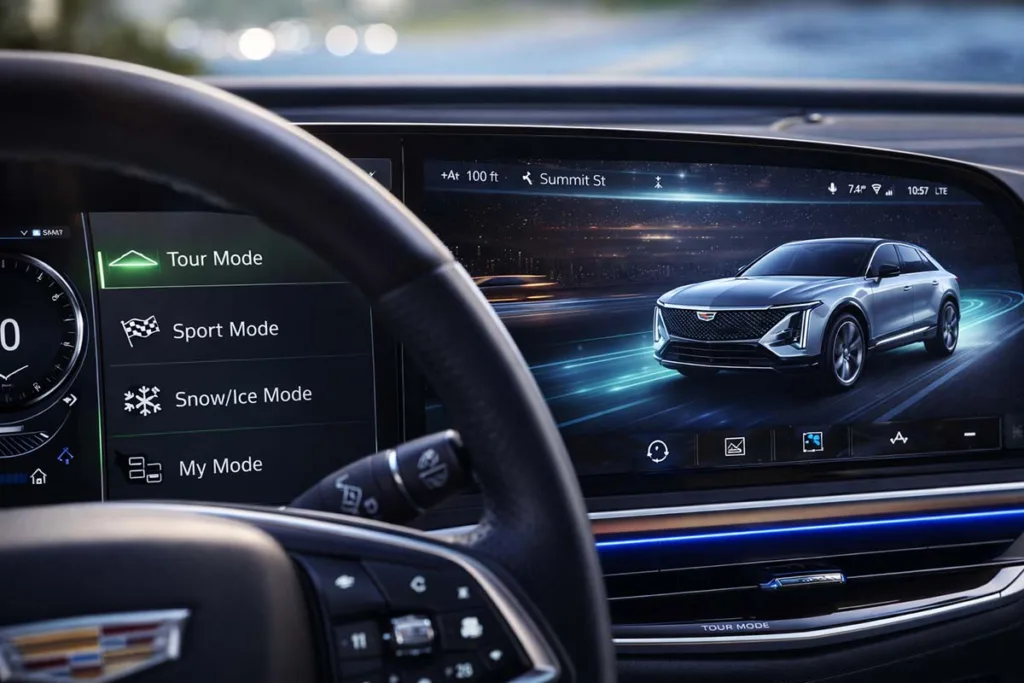
Driving modes in the Cadillac LYRIQ are not just cosmetic settings. Each mode adjusts how the vehicle responds, how power is delivered, and how efficiently energy is used. Understanding these differences helps you control both performance and battery usage in real driving.
1. Tour Mode (Best for Maximum Range)
This is the default and most balanced setting. Tour Mode focuses on smooth acceleration and stable energy efficiency.
- Gentle throttle response
- Controlled torque delivery
- Optimized for consistent electricity consumption
It works best for:
- Daily commuting
- Highway cruising
If your goal is to stay close to the EPA-estimated 326 miles range (RWD), this mode is your safest choice.
2. Sport Mode (Higher Performance, More Battery Usage)
Sport Mode transforms how the SUV feels. It sharpens power output and makes acceleration more aggressive.
- Faster torque response
- Increased power demand
- Higher battery drain
You’ll notice quicker take-offs, but at the cost of reduced energy efficiency. This mode is ideal for short bursts of performance, not long-distance range.
3. Snow/Ice Mode (Controlled Power, Stable Efficiency)
This mode is designed for low-traction conditions. It reduces sudden power delivery to improve control.
- Limited torque delivery
- Softer pedal mapping
- Enhanced traction control
The focus here is safety, not performance. Energy consumption stays steady, but cold weather can still reduce overall range.
4. My Mode (Custom Energy Behavior)
My Mode lets you fine-tune the driving experience. You can adjust:
- Throttle sensitivity
- Steering feel
- Regenerative braking intensity
This flexibility allows you to create a setup that balances battery efficiency and performance based on your driving style.
What Actually Changes in Each Driving Mode
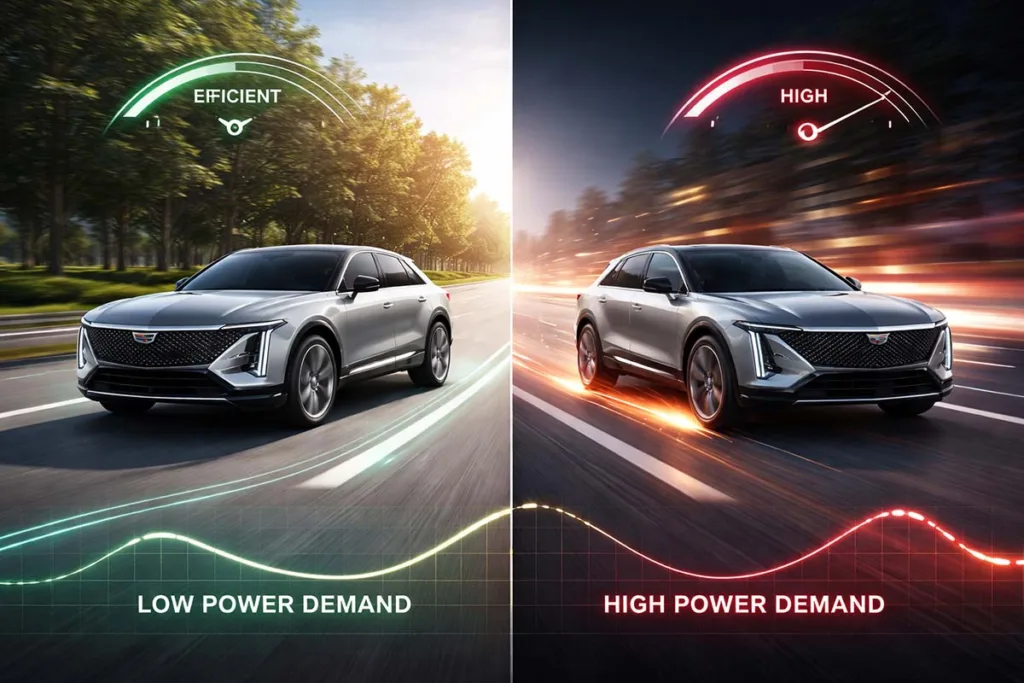
Driving modes in the Cadillac LYRIQ don’t just tweak feel—they adjust core systems that control how energy flows from the battery to the wheels. These changes directly affect battery usage and overall efficiency in real-world conditions.
Throttle Response and Torque Delivery
Each mode alters how quickly the vehicle reacts to your input.
- Sharper throttle response = higher power output
- Faster torque delivery = increased energy consumption
In performance-focused settings, the SUV pulls more power instantly. That leads to quicker acceleration, but also higher battery drain.
Traction, Stability, and Pedal Mapping
Modes like Snow/Ice adjust how power is controlled.
- Softer pedal mapping reduces sudden acceleration
- Enhanced traction control limits wheel slip
- Balanced stability control improves grip
These systems don’t add efficiency directly, but they prevent unnecessary energy loss during unstable driving.
Regenerative Braking and Energy Recovery
Driving modes also influence regenerative braking behavior.
- Stronger regen = more kinetic energy recovery
- Better deceleration control = improved energy efficiency
This means less wasted motion and more electricity returned to the battery during everyday driving.
Does Driving Mode Change Official EPA Range or Just Real-World Range?
This is where many drivers get confused. It feels like switching modes should change range numbers, but that’s not how EV ratings work. The Cadillac LYRIQ follows a fixed testing standard, regardless of how you drive it daily.
Official EPA Range Stays the Same
The EPA-estimated range is calculated under controlled conditions. It does not change with driving modes.
- Up to 326 miles (RWD)
- Around 319 miles (AWD)
These figures are based on standardized testing, not real-time energy consumption. So, whether you use Tour Mode or Sport Mode, the official rating remains constant.
Real-World Range Changes with Driving Behavior
In everyday driving, things are different. Modes affect how quickly energy is used.
- Higher power demand reduces real-world range
- Smoother inputs improve battery efficiency
So, driving modes don’t change the rating—but they do change your results.
Tour vs Sport vs Snow vs My Mode – Battery Usage Comparison
Choosing the right mode in the Cadillac LYRIQ comes down to how you want to balance performance and battery efficiency. Each mode shifts energy consumption differently. The table below makes it easy to compare real-world impact.
| Mode | Energy Use | Range Impact | Best Use Case |
| Tour | Low | Maximum real-world range | Daily driving, highways |
| Sport | High | Reduced due to higher power demand | Quick acceleration |
| Snow/Ice | Moderate | Stable energy usage | Slippery roads |
| My Mode | Variable | Depends on custom settings | Personalized driving |
Even with these differences, driving habits still play a bigger role. Smooth inputs and controlled speed improve energy efficiency more than mode alone.
Regenerative Braking, One-Pedal Driving, and Their Impact on Battery Efficiency
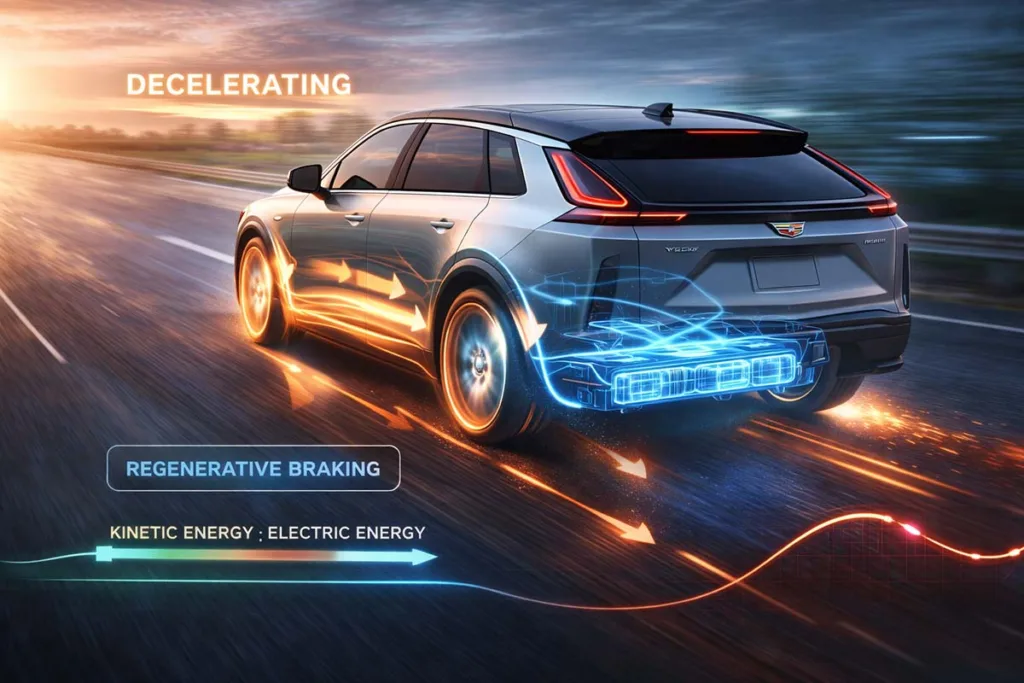
Beyond driving modes, the Cadillac LYRIQ uses smart energy recovery systems that directly improve battery efficiency. These features don’t increase battery size, but they help you use stored energy more effectively in daily driving.
Regenerative Braking and Energy Recovery
Regenerative braking converts motion into usable power. Instead of wasting energy during deceleration, the system captures kinetic energy and sends it back to the battery.
- Improves overall energy efficiency
- Reduces unnecessary battery drain
- Works best in stop-and-go traffic
One-Pedal Driving and Regen on Demand
With One-Pedal Driving, lifting your foot slows the vehicle while recovering energy. Regen on Demand lets you control deceleration using a paddle.
- Increases energy recovery
- Enhances driving control
- Supports better real-world range
Used correctly, these features can noticeably improve daily efficiency.
RWD vs AWD: Does Drivetrain Affect Battery Usage More Than Driving Modes?
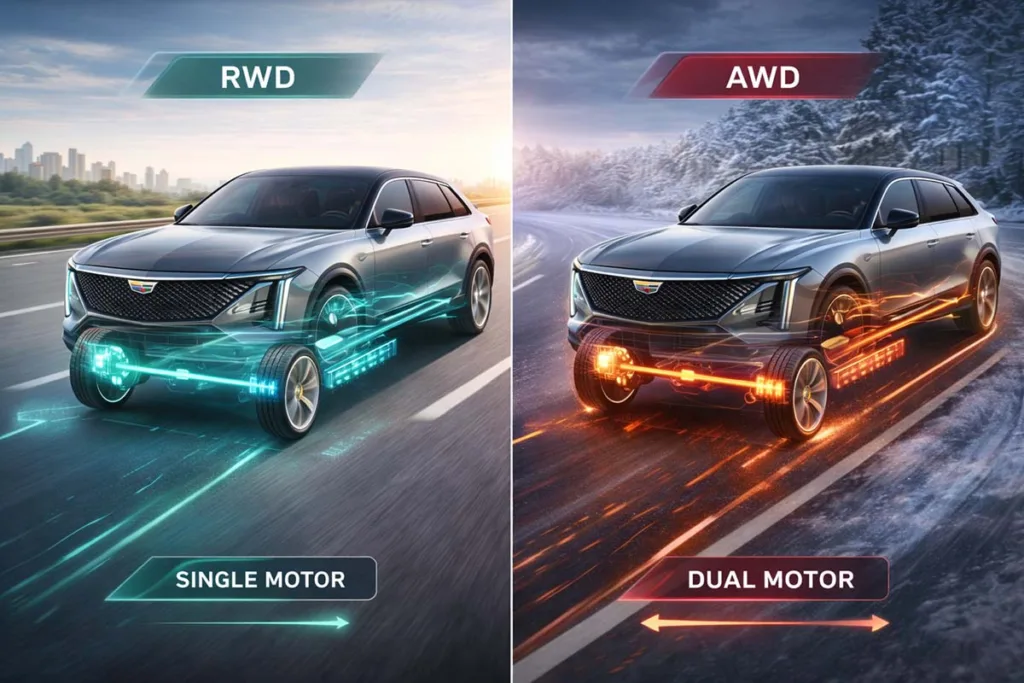
Driving modes matter, but drivetrain choice often has a bigger impact on battery usage in the Cadillac LYRIQ. The difference comes from how power is delivered to the wheels and how much energy is required to move the vehicle.
Single-Motor RWD vs Dual-Motor AWD
- RWD (rear-wheel drive) uses one motor, which lowers power demand
- AWD (dual-motor all-wheel drive) adds a second motor, increasing energy consumption
This is why:
- Up to 326 miles EPA-estimated range (RWD)
- Around 319 miles (AWD)
Which Matters More for Efficiency?
In real-world driving, drivetrain plays a major role.
- AWD offers better traction but higher electricity consumption
- RWD delivers better energy efficiency
So yes, drivetrain choice often impacts range more than mode selection.
Real-World Factors That Impact Cadillac Lyriq Range More Than Driving Modes
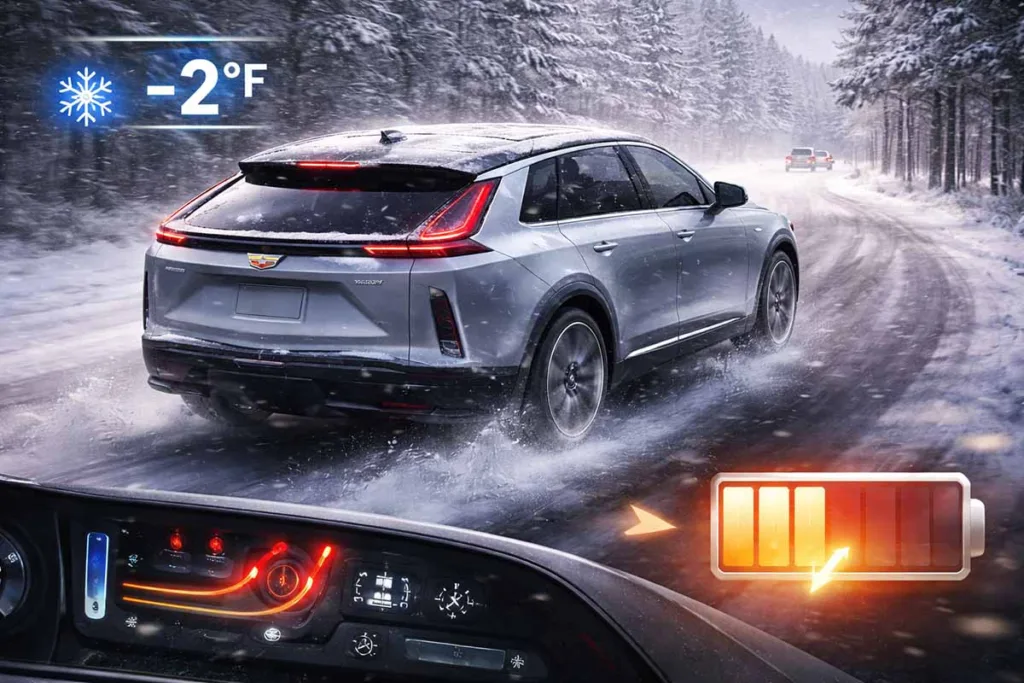
Driving modes help, but they are not the biggest factor in determining real-world range. In the Cadillac LYRIQ, everyday conditions and habits often have a stronger effect on battery efficiency than mode selection.
Key Factors That Influence Battery Usage
Several variables directly impact energy consumption:
- High speeds increase power demand and reduce efficiency
- Cold weather lowers battery performance and usable range
- Heavy HVAC usage (heating or cooling) raises battery drain
- Aggressive acceleration increases electricity consumption
Driving Habits and Environment Matter More
Your driving style plays a huge role.
- Smooth inputs improve energy efficiency
- Stop-and-go traffic can benefit from regenerative braking
- Proper preconditioning helps manage battery temperature
Even with the same mode, results vary. That’s why real-world outcomes often differ from estimates.
Practical Scenarios: When Each Mode Uses More or Less Battery
Understanding theory is helpful, but real value comes from how you use modes daily. In the Cadillac LYRIQ, the right mode depends on your driving situation and how you manage energy consumption on the road.
Best Mode Based on Driving Conditions
Here’s how different scenarios affect battery usage:
- Highway cruising → Tour Mode keeps steady energy efficiency
- Quick overtakes → Sport Mode increases power demand and battery drain
- Snow or wet roads → Snow/Ice Mode stabilizes torque delivery
- City traffic → Use regen features to reduce electricity consumption
Smart Mode Selection for Efficiency
Choosing wisely helps:
- Smooth driving lowers energy usage
- Avoid aggressive acceleration
- Combine modes with regenerative braking
Small adjustments can noticeably improve daily range.
FAQ Section
Does Sport mode reduce range in the Cadillac LYRIQ?
Yes. Sport Mode increases power demand and sharpens throttle response, which leads to higher battery drain. This reduces real-world range, even though the EPA-estimated range stays the same.
Is Tour mode best for long-distance driving?
Absolutely. Tour Mode is designed for stable energy efficiency and smoother torque delivery. It helps you stay closer to the 326 miles range (RWD) under normal conditions.
Does One-Pedal Driving save battery?
It can help. One-Pedal Driving uses regenerative braking to recover kinetic energy. This improves battery efficiency, especially in city traffic.
Can My Mode improve efficiency?
Yes, if configured correctly. Adjusting throttle sensitivity and regenerative braking can lower energy consumption and improve overall efficiency.
Does Snow/Ice mode increase battery usage?
Not directly. Snow/Ice Mode reduces torque delivery and stabilizes energy usage, but cold weather itself can still impact range.
Conclusion
Yes, but not in the way many drivers expect. In the Cadillac LYRIQ, driving modes don’t change the 102-kWh battery capacity or official ratings like 326 miles EPA-estimated range. What they do change is how quickly energy is used.
Modes like Tour Mode improve energy efficiency, while Sport Mode increases power demand and battery drain. Still, your driving habits matter more. Smooth acceleration, smart use of regenerative braking, and controlled speed have the biggest impact on real-world range. Driving mode helps—but it’s not the deciding factor.
For more insightful articles, please visit Techroyall.