


Frustrated by sudden slowdowns while running your project? You are not alone. python sdk25.5a burn lag refers to a noticeable delay or slowdown during execution, especially when handling heavy tasks. It often appears when the Python SDK 25.5a consumes too many system resources like CPU usage and RAM usage, causing performance drops.
In simple terms, burn lag means your code is running, but not efficiently. You may see delays from 120 ms to 3 seconds, freezing terminals, or slow API calls and file I/O operations. This usually happens due to memory leaks, dependency conflicts, or blocking operations.
It can affect module loading, large datasets, and long running scripts, making development slower and frustrating.
Symptoms of Python SDK25.5a Burn Lag
You will usually notice burn lag before you understand its cause. The signs appear during normal development tasks and get worse over time. Spotting these early helps you fix issues faster.
- High CPU usage spikes reaching 80 percent to 95 percent, especially during repeated operations
- Sudden RAM usage growth, often around 15 percent or more, pointing to memory leaks
- Execution delays increasing from 120 ms to 3 seconds, affecting responsiveness
- Frequent IDE or terminal freezing during heavy workloads
- Slow file I O when handling large datasets or continuous read write tasks
- Laggy or delayed API calls, often due to network latency or blocking requests
- Performance drop in long running scripts, especially after hours of execution
These symptoms often signal deeper issues in resource consumption, code efficiency, or environment setup.
Primary Reasons of Python SDK25.5a Burn Lag
Burn lag rarely comes from one issue alone. In most cases, it builds from a mix of system pressure, environment problems, and code inefficiencies. Once you understand the root causes, fixing the slowdown becomes much easier. That is why a proper diagnosis matters more than guessing.
Heavy Resource Consumption
The Python SDK 25.5a can put extra pressure on CPU usage and RAM usage during heavy workloads. This is more noticeable when scripts process large files, repeated tasks, or constant background activity.
Dependency Conflicts in sdk25.5a burn software python
Old libraries, mismatched packages, or bloated installs can slow module loading and dependency resolution. These conflicts often make the environment unstable and increase execution time.
Memory Leaks and Garbage Collection Issues
Poor object cleanup can lead to memory leaks in long running scripts. Over time, delayed garbage collection causes memory growth and weaker responsiveness.
Inefficient Code and Blocking I O Operations
Nested loops, redundant operations, and synchronous file I/O or API calls can create serious bottlenecks. Small inefficiencies often become large delays under pressure.
Slow Disk or Storage Performance
Projects running on an HDD usually feel slower than those on an SSD. Disk speed affects caching, read write tasks, and temporary file access.
Network Latency and API Delays
External requests can also trigger lag. High network latency, slow endpoints, and poor connection pooling can push response times from 200 ms to 2.5 seconds. In busy systems, these delays can stack up fast and hurt overall throughput badly.
Diagnosis of Python SDK25.5a Burn Lag

Before fixing anything, you need to know what is actually slowing your system down. Guesswork wastes time. A simple, structured diagnosis helps you pinpoint the exact bottleneck and avoid unnecessary changes. Focus on measurable data, not assumptions.
Monitor System Resources
Start by tracking CPU usage, RAM usage, and disk activity in real time. Look for spikes, especially when performance drops. If usage jumps to 80 percent to 95 percent, it often signals a resource bottleneck.
Use Python Profiling Tools
Profiling tools give you clear visibility into performance issues. Use cProfile, memory_profiler, and timeit to measure execution time and memory behavior. These tools highlight slow functions and hidden inefficiencies.
Analyze Dependencies and Environment
Check your virtual environments such as venv or conda for unnecessary or outdated packages. Too many dependencies can slow module loading and create conflicts that impact stability.
Identify Bottlenecks Using Real Metrics
Measure actual performance trends. Watch for delays rising from 120 ms to 3 seconds or sudden drops in throughput. Compare results under different workloads. This helps you locate whether the issue comes from code, system limits, or external services.
Python SDK25.5a Burn Lag How to Fix
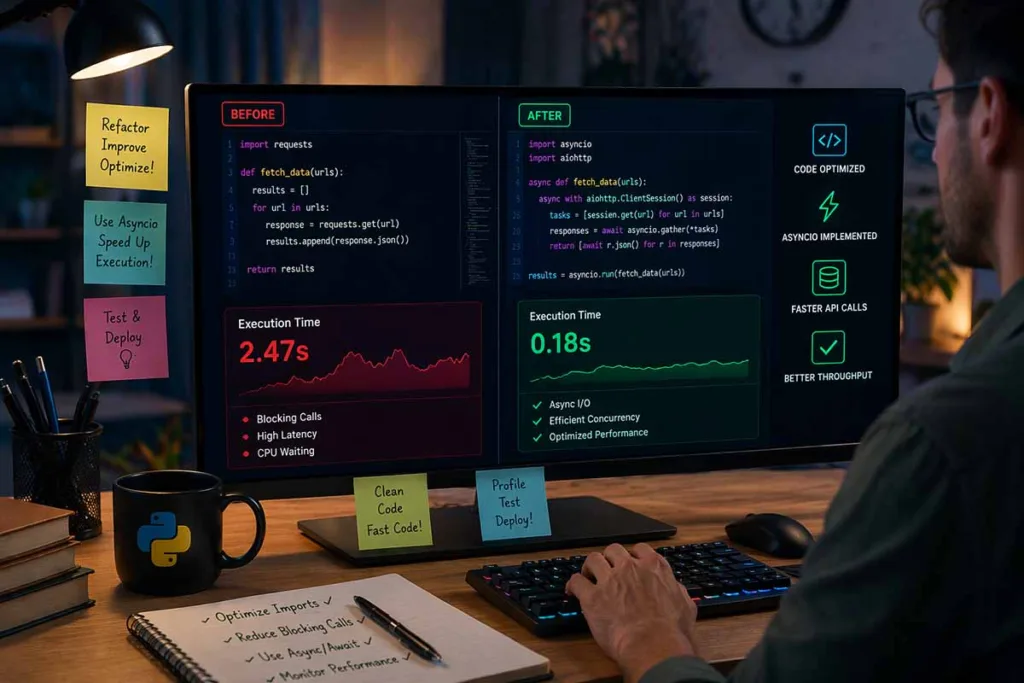
Fixing burn lag is not about one quick tweak. You need a layered approach that targets system limits, environment issues, and code inefficiencies. Start with simple fixes, then move toward deeper optimizations. This step-by-step method saves time and avoids breaking working setups.
Install a Clean Python Environment
A fresh setup often removes hidden issues. Use virtual environments like venv or conda to isolate dependencies. This reduces conflicts and improves stability in sdk25.5a burn software python setups.
Rid of Cache and Temporaries
Old cache files can slow performance over time. Clear temporary folders, unused build files, and SDK cache regularly. This helps reduce unnecessary disk access and improves responsiveness.
Optimize Code Performance
Focus on improving logic efficiency. Replace nested loops and redundant operations with optimized structures. Use sets or dictionaries where possible to improve execution time and reduce CPU load.
Apply Asynchronous Programming
Blocking tasks slow everything down. Switch to asyncio for non-blocking execution. This is especially useful for handling multiple API calls or background tasks efficiently.
Optimize File and Network I/O
Reduce heavy file I O and unnecessary network requests. Batch operations instead of processing one by one. This minimizes delays caused by network latency and improves overall throughput.
Manage Memory Actively
Watch for memory leaks in long running scripts. Release unused objects and monitor RAM usage regularly. Efficient memory handling keeps performance stable over time.
Upgrade or Reinstall sdk25.5a burn software
Sometimes the issue lies in a broken setup. Reinstall Python SDK 25.5a cleanly. This fixes corrupted files and resolves hidden configuration errors.
Enhance Hardware Performance
Hardware also matters. Moving from HDD to SSD can significantly improve speed. Increasing RAM helps handle larger workloads without performance drops.
Advanced Fixes for High Load Systems
For demanding setups, apply deeper optimizations. Limit repeated executions, rotate long running clients, and control workload spikes. Keep response times under 200 ms where possible, instead of letting them rise toward 2.5 seconds. In high traffic systems handling 1000 to 10000 requests, even small optimizations can create a noticeable performance gain.
Real World Scenario: Burn Lag in Production Systems

Burn lag becomes more visible in production than in testing. Everything may run fine at first, but issues appear under continuous load. This is where small inefficiencies turn into real performance problems.
Imagine a service using Python SDK 25.5a handling around 1000 to 10000 requests. In the first hour, response times stay near 200 ms. After 3 to 4 hours, delays begin to rise. Eventually, some requests take 2.5 seconds or more.
This happens due to growing RAM usage, unoptimized API calls, and weak connection pooling. Over time, memory leaks and repeated tasks reduce system throughput.
Once diagnosed, fixes like async processing, batching, and better resource control can restore stable performance and prevent future slowdowns in high load environments.
Best Practices to Avoid Burn Lag in Future Projects
Preventing burn lag is always easier than fixing it later. A few smart habits can keep your system stable and responsive from the start. Focus on consistency, monitoring, and clean development practices.
Efficient Resource Management
Keep an eye on CPU usage and RAM usage during development. Avoid overloading your system with unnecessary processes. Balanced resource usage helps maintain steady performance even under pressure.
Use Code Profiling Regularly
Make profiling part of your workflow. Tools like cProfile and memory_profiler help detect hidden slowdowns early. This prevents small issues from growing into major bottlenecks.
Keep Dependencies Clean and Updated
Use controlled virtual environments like venv or conda. Remove unused libraries and avoid version conflicts. Clean dependencies improve module loading and reduce errors.
Implement Performance Monitoring
Track execution time, throughput, and system behavior over time. Continuous monitoring helps you catch performance drops before they impact users.
FAQ Section
What is sdk25.5a burn software in python?
It refers to tools or processes within Python SDK 25.5a that handle heavy tasks like file operations or repeated execution. When these processes become inefficient, they can increase CPU usage and cause lag.
How to solve sdk25.5a burn software problem quickly?
Start with basic fixes. Clean your environment, remove unused dependencies, and monitor RAM usage. Use tools like cProfile to identify slow functions and reduce execution time.
Does hardware affect python sdk25.5a burn lag?
Yes, hardware plays a big role. Systems with low memory or slow HDD storage often struggle more. Switching to an SSD and increasing RAM can improve throughput and stability.
Is sdk25.5a burn fix code necessary for all cases?
Not always. Some issues come from environment setup or system limits. However, optimizing code helps prevent long term performance degradation.
Can async programming reduce burn lag?
Yes, using asyncio helps manage multiple API calls without blocking execution. This improves responsiveness, especially when handling delays that can rise from 200 ms to 2.5 seconds.
Conclusion
Burn lag in Python SDK 25.5a can slow your workflow and affect overall performance. It often comes from a mix of CPU usage, RAM usage, inefficient code, and poor environment setup. The good part is that most issues are fixable with the right approach. Focus on proper diagnosis, clean environments, and optimized logic. Keep tracking execution time and throughput. When managed early, even heavy workloads can stay smooth and responsive without hitting delays like 2.5 seconds.
For more insightful articles, please visit Techroyall.