

Modern software runs everything around you. However, have you ever wondered what actually takes place in the background? Systems like HCS 411GITS are not built randomly. They follow a structured path that blends requirements analysis, system architecture, and real time processing.
If you are trying to understand how hcs 411gits software is built, you need more than surface level explanations. You need a clear view of how modular systems, APIs, and workflow automation come together to create a working solution.
This guide breaks it down step by step. You will see how planning, coding, testing, and deployment connect. You will also learn how developers improve software hcs 411gits using performance optimization, monitoring, and smart updates.
What Is HCS 411GITS Software?
Understanding this system helps you see how complex software works in real environments. It is not just code. It is a combination of logic, data flow, and intelligent processing working together.
Core Purpose and System Role
HCS 411GITS works as a modular system designed to handle real time processing and smart decision making. It manages workflow automation across different system layers. This allows faster communication between components and smoother operations in complex environments.
Where It Is Used
This software fits into multiple domains. You may find it in:
- smart infrastructure systems
- enterprise level platforms
- automation driven environments
Its flexibility comes from scalable architecture and adaptive design.
Why It Requires Structured Development
Such systems demand careful planning. They rely on system architecture, data integration, and performance tuning. Failures and latency become more common in the absence of an organized strategy. That is why every stage of development must be precise and connected.
Step 1: Requirements Analysis and Planning

Every strong system starts with clarity. This stage defines what the software should do and how it should behave. Without proper planning, even the best code fails later.
Understanding User Needs
Developers begin with stakeholder interviews to gather expectations. They create user stories and detailed use cases to map real scenarios. This helps teams understand how users will interact with the system in daily operations.
Defining System Scope
Next, teams outline functional requirements and non-functional requirements. These include performance, scalability, and security goals. Clear scope reduces confusion and avoids costly changes later.
Planning Tools and Documentation
To visualize the system, teams use UML diagrams and flowcharts. These tools break down complex logic into simple structures. Good documentation ensures every developer follows the same plan and builds consistently.
Step 2: System Architecture Design
Once planning is clear, the system starts taking shape. This stage defines how different parts connect and communicate. A strong structure ensures stability, speed, and long term scalability.
Core Architecture Layers
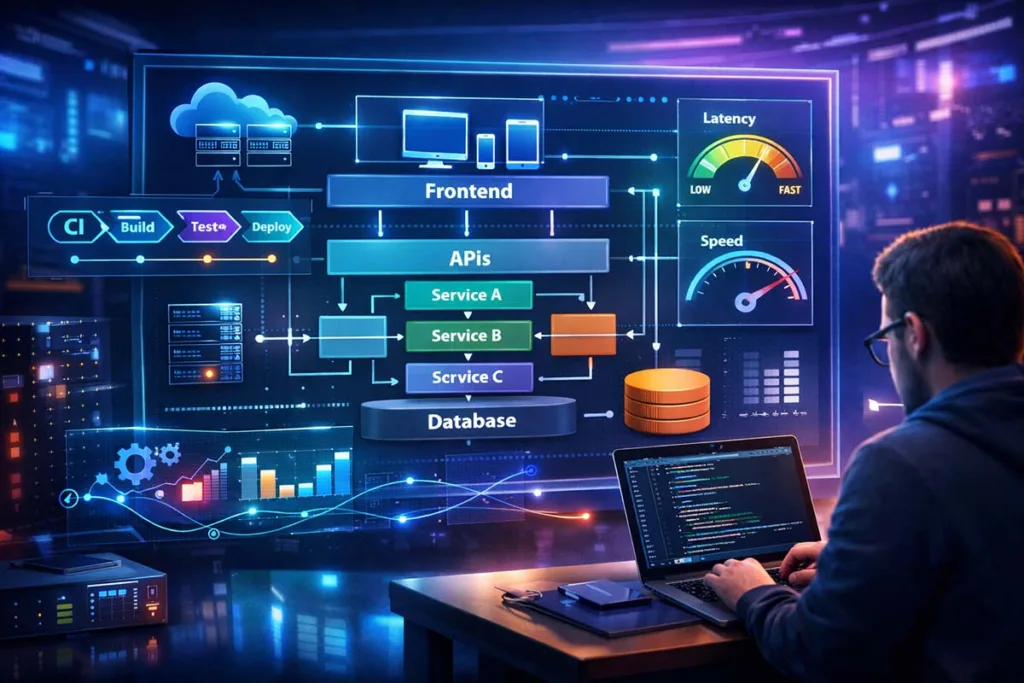
The system is divided into clear layers for better control and flexibility:
- Frontend interface handles user interaction and display
- Backend logic processes requests and runs core functions
- Database structure stores and manages data efficiently
Each layer works through APIs to maintain smooth communication and avoid system conflicts.
Architecture Style Used
Most modern builds prefer microservices over monolithic systems. This allows independent modules that scale easily. A modular system design improves maintainability and reduces failure impact across components.
Infrastructure Setup
The system runs on cloud infrastructure for flexibility and uptime. In advanced cases, edge computing supports faster local processing. Teams also use Docker and Kubernetes for containerized deployment, ensuring consistent performance across environments and easier scaling under load.
Step 3: Development and Coding Process
This is the point at which concepts become a functional system. Developers start building features based on the planned architecture. Every module must connect smoothly and perform under real conditions.
Programming Languages and Tools
Teams choose reliable technologies like JavaScript and Python for flexibility and speed. Code is managed using Git version control, which tracks changes and prevents conflicts. This setup supports collaboration and keeps development organized.
Clean Code and Collaboration
Developers follow clean code practices to keep logic simple and readable. They build reusable modules to avoid duplication. Work flows through pull requests, where peers review code before merging. This reduces bugs and improves overall quality.
API and Integration Development
Communication between components happens through APIs. These connect internal modules and external services. Proper system integration ensures data flows correctly across layers. This step is key when explaining how hcs 411gits software built into a stable and scalable system.
Step 4: Testing and Quality Assurance

Before release, every part must prove it works. Testing checks stability, accuracy, and performance under real conditions. This stage prevents failures and protects user experience.
Types of Testing
Teams run multiple tests to validate the system:
- Unit testing checks small components individually
- Integration testing ensures modules work together
- System testing validates the full application
Each level helps catch issues early and reduce production errors.
Automation and CI/CD
Modern teams rely on CI/CD pipelines for faster validation. Tools like Jenkins and GitHub Actions automate builds and tests. This approach improves consistency and speeds up feedback cycles.
Performance Testing
Developers use load testing to measure system limits. They identify bottlenecks in latency, memory, and response time. Strong testing leads to faster bug detection and a more reliable system.
Step 5: Deployment and Monitoring
Once testing is complete, the system moves to live environments. This stage ensures users can access the software smoothly. It also focuses on stability and continuous tracking.
Deployment Process
Developers push code through a deployment pipeline. It usually follows a path from staging to production. CI/CD pipelines automate this flow, reducing manual errors. This approach shortens release time and keeps updates consistent.
Monitoring Tools
After deployment, teams track system health using monitoring dashboards. Tools like Grafana and Nagios help measure performance, uptime, and errors. Real time tracking allows quick detection of unusual behavior.
Rollback and Stability
Even with strong testing, issues can appear. Teams prepare a rollback strategy to restore previous versions quickly. This reduces downtime and protects users. Proper monitoring combined with rollback ensures long term system stability and reliability.
Step 6: Performance Optimization
After deployment, performance becomes the main focus. Even a stable system can slow down under load. This stage ensures speed, efficiency, and long-term reliability.
Identifying Bottlenecks
Developers start by analyzing system behavior. Common issues include:
- Slow database queries
- Memory leaks
- High latency during requests
Studies show nearly 67% of system issues come from database and memory problems. Identifying these early helps prevent major failures.
Optimization Techniques
Teams apply targeted improvements to fix weak points:
- Caching to reduce repeated processing
- Indexing for faster data retrieval
- Profiling tools to track CPU and memory usage
These techniques improve response time and reduce resource load.
Why Optimization Matters
Strong optimization leads to better scalability and smoother performance. It allows developers to improve software hcs 411gits without changing the core structure. This ensures faster execution and a better user experience.
Step 7: Security and Compliance Layer
Security is not optional in modern systems. It protects data, users, and system integrity. Without it, even a well-built system becomes vulnerable.
Security Measures
Developers implement strong controls to secure the system:
- Encryption protects sensitive data
- Role based access control limits user permissions
- Regular security audits detect weaknesses early
These steps reduce risks and prevent unauthorized access.
Data Protection
All communication must stay secure. Teams use secure APIs and strong authentication systems to protect data flow. This ensures safe interaction between system components.
Compliance Standards
Systems must follow strict rules for data handling. Many adopt zero trust architecture and align with privacy regulations. This builds trust and keeps the system compliant with modern security requirements.
Step 8: Updates, New Versions, and Maintenance
Software is never finished after launch. It evolves with new needs, user feedback, and system demands. Regular updates keep performance stable and features relevant.
How Updates Work
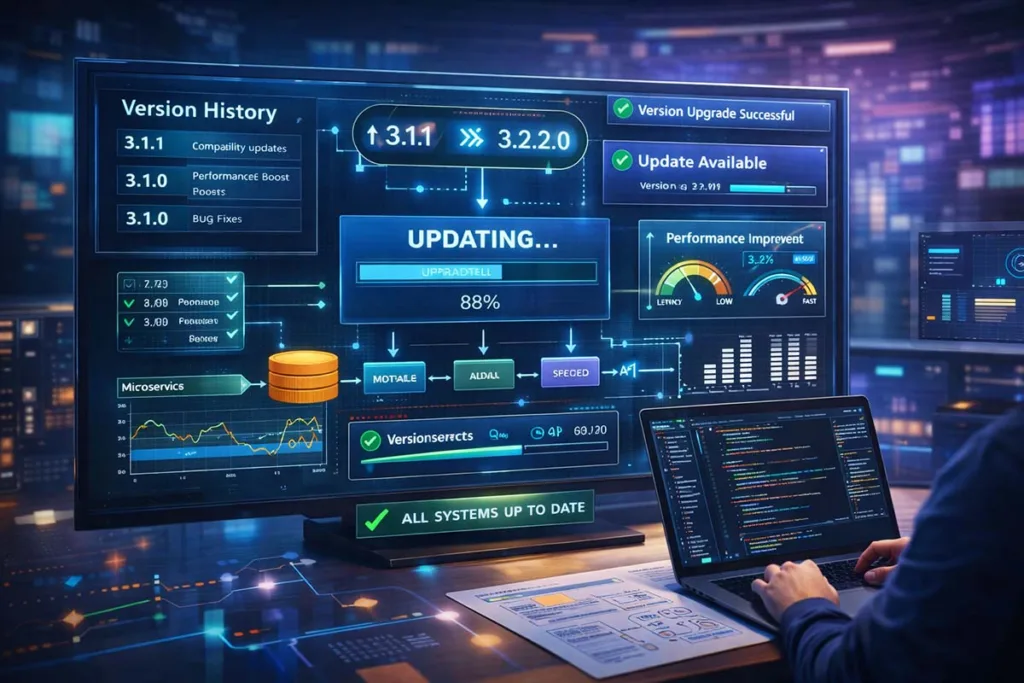
Teams follow agile development to release improvements in cycles. Changes are tracked using version control, ensuring every update is safe and reversible. Automated pipelines help deliver updates faster with fewer errors.
System Improvements
Each release focuses on measurable gains:
- Better speed and reduced latency
- Improved stability and fewer crashes
- Enhanced features and usability
These updates directly support software hcs 411gits updated performance goals.
Migration and Compatibility
When a hcs 411gits new version is released, systems must stay compatible. Developers manage API changes and maintain backward compatibility. This prevents disruptions and ensures smooth transitions across environments.
Step 9: Error Handling and Troubleshooting
Even well-built systems face issues. What matters is how quickly they detect and fix them. A strong troubleshooting process keeps the system reliable and reduces downtime.
Common System Issues
Some problems appear frequently in complex systems:
- Sudden crashes under load
- Slow responses due to latency
- Failures caused by memory leaks or bad queries
These issues often affect performance and user experience.
Role of Error Codes
The system uses hcs 411gits error codes to signal specific problems. These codes act as quick indicators for developers. They help locate faults without scanning the entire system.
Fixing Errors Efficiently
Teams rely on logs, monitoring dashboards, and structured debugging. They perform root cause analysis to solve issues permanently. This approach ensures faster recovery and prevents repeated failures.
Key Takeaways
Here is a quick summary to understand the full process clearly. It connects all stages into one simple flow.
- Starts with requirements analysis and clear planning
- Moves to system architecture with layered design
- Built using coding, APIs, and modular components
- Tested through multiple stages for stability
- Deployed using CI/CD pipelines and monitored continuously
- Improved with performance optimization and regular updates
This step-by-step flow explains how complex systems stay efficient and reliable over time.
FAQ Section
How hcs 411gits software is built step by step?
It starts with requirements analysis, then moves to system architecture design. Developers build modules using clean code and APIs. After that, the system goes through testing, deployment, and continuous improvement.
What technologies are used in hcs 411gits software?
Common tools include JavaScript, Python, and Git version control. Systems often run on cloud infrastructure with support from Docker and Kubernetes for scaling.
How to improve software hcs 411gits performance?
Developers fix database queries, remove memory leaks, and reduce latency. Techniques like caching and profiling tools help boost speed.
Why does hcs 411gits show error codes?
hcs 411gits error codes appear when the system detects faults. They help developers trace issues quickly using logs and debugging tools.
Conclusion
Building a system like HCS 411GITS is not just about writing code. It is about connecting requirements analysis, system architecture, and real-world performance into one smooth flow. Every stage matters. A small mistake in planning or design can affect the entire system later.
The real strength comes from continuous improvement. Teams use performance optimization, monitoring, and updates to keep systems stable and fast. With the right structure, tools, and process, even complex software can stay reliable, scalable, and ready for future demands.