
Digital content is getting harder to ignore, but also harder to trust. Audiences now expect more than clean visuals and smooth layouts. They want speed, depth, personalization, and interaction. That is why tech trends gfxprojectality is getting attention across design, marketing, retail, training, and product teams. The term is being used to describe the mix of advanced graphics, intelligent workflows, and immersive experiences shaping modern digital work.
In 2026, the real question is not whether these shifts matter. It is which ones are useful now, and which ones are still hype. The strongest competitor pages keep circling the same ideas: generative AI, AR, VR, real-time rendering, cloud collaboration, and more practical creative systems. This article cuts through that noise and focuses on the trends that are already changing how people build and experience digital products.
What Is Tech Trends GFXProjectality?
At its core, tech trends gfxprojectality is not one app, one company, or one toolset. It is a broad idea built around the meeting point of visual technology, automation, interactive design, and digital collaboration. Several ranking pages describe it as the shift from static digital output to more responsive, intelligent, and immersive systems.
The “GFX” part points to graphics, visual communication, 3D experiences, and design-led technology. The “projectality” side suggests something more applied. It points to how these tools show up in real projects, real workflows, and real user experiences. That makes the topic larger than graphic design alone. It also touches product visualization, creative operations, training systems, and interactive digital environments.
What makes the term useful is its scope. It captures how modern teams now work across AI-assisted workflows, immersive technology, cloud platforms, and data-driven design without treating them as separate worlds. Instead of asking how a design looks, the better question is how it works, adapts, and performs for the user. That is the real meaning behind latest tech gfxprojectality in 2026.
Why GFXProjectality Matters More in 2026
This topic matters more now because digital expectations have changed. Users no longer compare a site or app to its direct competitors only. They compare every experience to the best one they used this week. That shift puts pressure on brands and creators to move beyond static visuals and into interactive content, personalized experiences, and faster creative delivery.
Another reason is timing. Many of the technologies that once felt experimental now have practical use cases. Competitor pages repeatedly frame 2026 as the point where AI, XR, and cloud-based workflows are not just interesting. They are usable, scalable, and often expected. The biggest change is simple: digital experiences are becoming less like pages people view and more like systems people use. That is why gfxprojectality latest tech by gfxmaker and similar phrases keep appearing around this topic.
The shift from visuals people watch to experiences people use
This is the real pivot. A static banner can still attract attention, but an interactive model, an AR preview, or a smart interface can hold it longer and convert it better. That difference matters in retail, education, onboarding, product launches, and content marketing. In short, gfxprojectality matters because digital design is no longer only visual. It is now behavioral, contextual, and increasingly intelligent.
Also Read: AI Graphic Design GFXRobotection: Future Revealed
7 Tech Trends GFXProjectality You Can’t Ignore in 2026
The current SERP keeps repeating a familiar set of trends, but the better way to understand them is through outcomes. Each trend below matters because it changes speed, quality, engagement, or decision-making. That is what makes these tech trends gfxprojectality worth watching.
1. Generative AI becomes a creative co-pilot
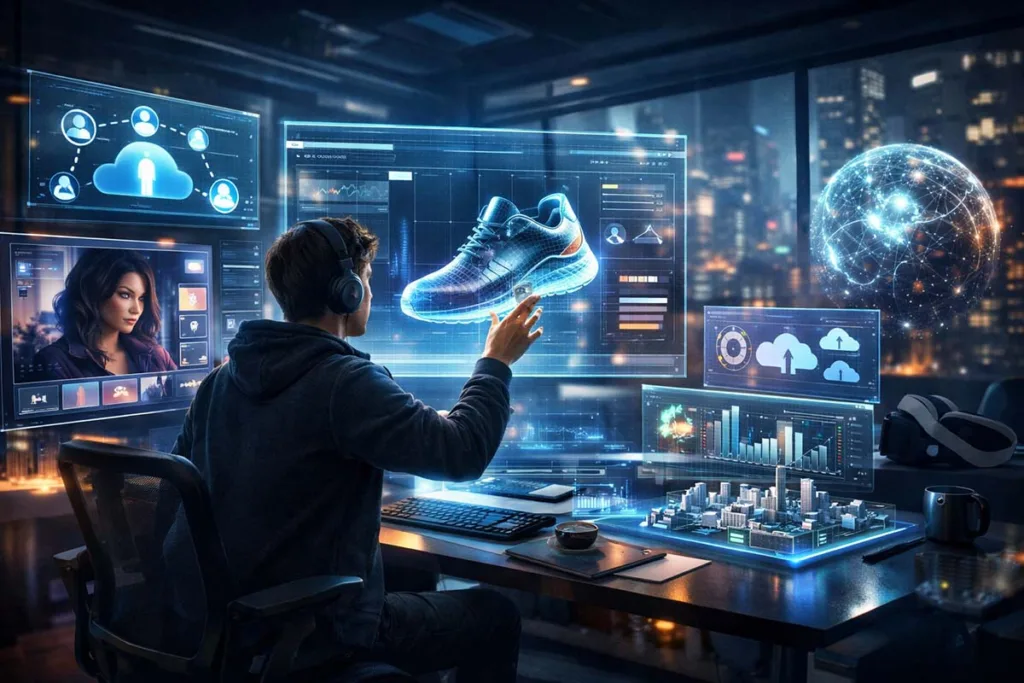
The most important shift is not that generative AI can make things. It is that it can now support real workflows. Competitor pages describe AI as moving from novelty to necessity, especially for ideation, asset generation, variation testing, and repetitive design tasks. In practice, that means faster rapid prototyping, quicker concept exploration, and more efficient automated asset generation.
Used well, AI does not replace judgment. It expands it. Designers and marketers can generate more options, compare more directions, and spend more time refining what matters. That makes AI-assisted workflows one of the clearest signals in latest tech gfxprojectality today.
2. AR and VR move from novelty to real use
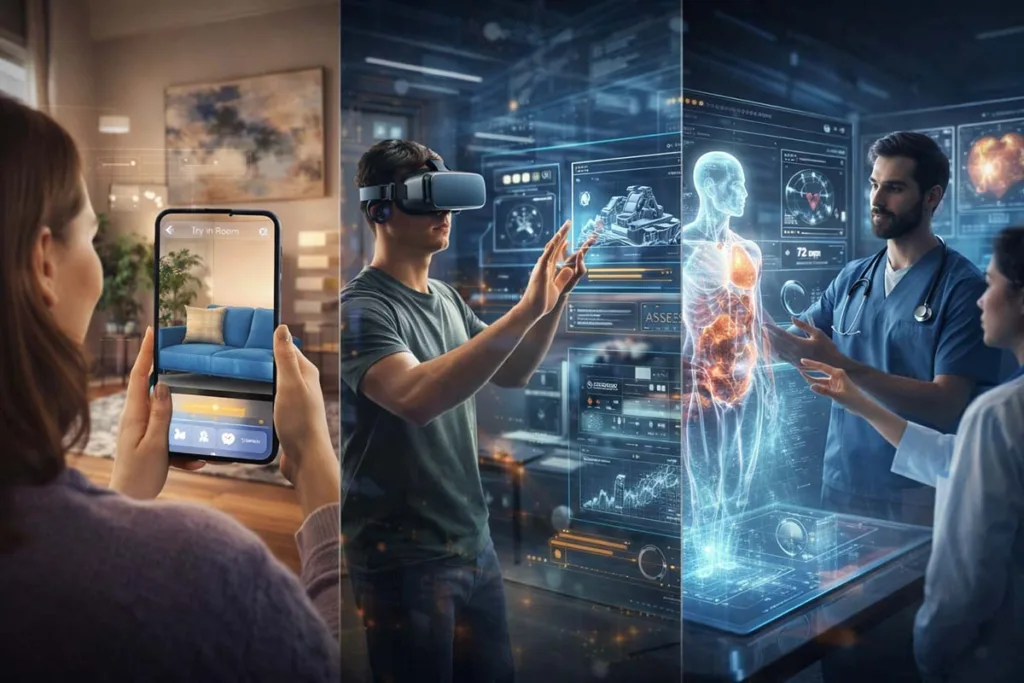
AR and VR have matured because they solve real experience problems. Across the competitor set, these tools are tied to virtual try-ons, product previews, simulations, and immersive storytelling. Brands use AR experiences to reduce uncertainty before purchase. Training teams use VR simulations to create safer practice environments.
The bigger point is usability. Immersive technology is no longer limited to gaming talk. It is now tied to learning, sales, retail, and product discovery. That makes AR and VR one of the strongest applied trends inside gfxprojectality tech trends from gfxmaker and related content.
3. Real-time rendering changes how digital experiences are built
This is one of the most practical shifts on the list. Real-time rendering lets teams see lighting, materials, motion, and layout changes instantly instead of waiting through long export cycles. Competitor pages repeatedly point to Unreal Engine, Unity, WebGL, and browser-based 3D experiences as signs that live rendering is moving into mainstream workflows.
The value is speed, but not only speed. It also improves review cycles, client feedback, and product visualization. Photorealistic rendering and interactive 3D experiences now help teams show products in more useful ways, especially when customers want to explore rather than just look.
4. Cloud collaboration makes creative work faster and wider
Creative work is no longer locked to one machine or one office. Competitor pages stress how cloud collaboration supports shared files, real-time updates, version control, and access to heavier workflows without expensive local hardware. That matters for agencies, startup teams, and distributed creators working across time zones.
The benefit is not just convenience. Cloud-based workflows reduce friction. They also make it easier to scale projects, involve more contributors, and keep production moving. In that sense, creative workflows are becoming more connected, more responsive, and much less dependent on location.
5. Spatial computing creates a new layer of interaction
A lot of pages mention immersive tech, but fewer explain the next step clearly. That next step is spatial computing. Instead of designing only for flat screens, teams are starting to design for depth, placement, and movement in space. One competitor page puts it simply: you are not designing screens anymore. You are designing spaces.
This matters because mixed reality, browser-based AR, and new interface models change how people interact with products and information. Retail, training, and product demos all benefit from this shift. The companies learning these habits now will be ahead when spatial experiences become more normal in everyday workflows.
6. Low-code tools speed up digital creation
While not every competitor explains this well, the wider topic clearly points toward faster production and more accessible creation. Low-code development and simplified visual tools help teams test ideas quickly, shorten feedback cycles, and involve people outside engineering in early product work. That matters when speed decides which ideas get shipped.
The best part is practical. Teams can build MVPs, workflows, and interactive demos faster. That makes workflow automation and faster deployment a real advantage, not just a convenience feature. In a crowded market, speed often beats polish in the early stages.
7. Data and personalization make visuals smarter
The final trend is intelligence layered into the experience itself. Competitor content increasingly ties this topic to personalized experiences, predictive analytics, and adaptive interfaces. That means visuals no longer need to look good for everyone in the same way. They can respond to context, user behavior, and intent.
This is where data-driven design becomes powerful. When teams connect design choices to actual behavior, they improve engagement, reduce friction, and make better decisions. In 2026, smarter visuals are not just prettier. They are more useful, more relevant, and more likely to perform.
Real-World Uses of GFXProjectality Across Industries
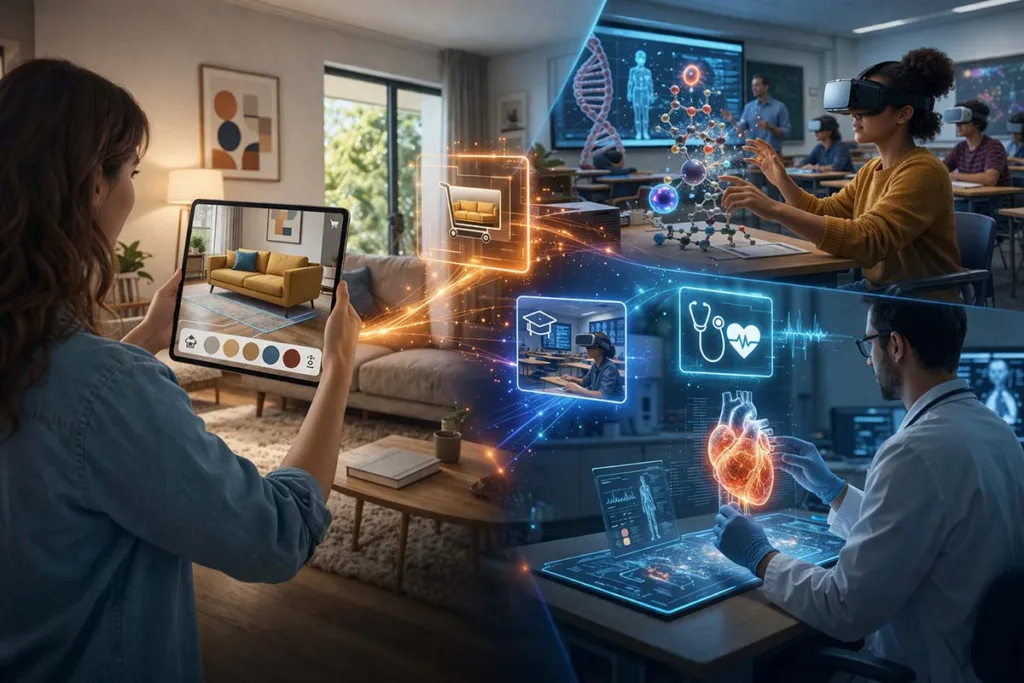
These trends matter because they are already showing up in real sectors. Competitor pages repeatedly mention retail, education, healthcare, architecture, and digital brand experiences. That range shows the topic is broader than design culture. It is about applied digital interaction.
Retail and e-commerce
Retailers are using AR product previews, 3D product demos, and interactive shopping tools to reduce hesitation and improve trust. That helps customers understand products before they buy, which can reduce returns and boost confidence.
Education and training
Training teams use immersive learning and simulation-led practice to create safer, more realistic environments. This is especially useful when repetition matters and mistakes are costly.
Healthcare and simulation
Healthcare use cases include simulation, guided visuals, and practice environments where professionals can build confidence without real-world risk. This is one of the clearest examples of experience-led technology creating practical value.
Marketing and digital storytelling
Brands are also using interactive storytelling, virtual environments, and richer visual systems to hold attention longer. That makes marketing less passive and far more memorable.
The Biggest Challenges Behind These Trends
The opportunity is real, but so are the frictions. One of the more useful competitor pages points to high costs and data privacy concerns, while others imply a wider challenge around skill gaps and tool overload. Those issues matter because adoption is never just about interest. It is about readiness.
What to watch before investing time or budget
Teams need to ask practical questions first. Can current workflows support these tools? Is there enough internal skill to use them well? Will third-party systems create privacy risks? The strongest approach is selective adoption. Treat tech trends gfxprojectality as a filter for useful tools, not a reason to chase every new release.
How to Prepare for the Latest Tech GFXProjectality Shift

The smartest next step is not a full rebuild. It is a focused test. Several competitor pages emphasize practical use over hype, and that is the right mindset here. Start with one workflow, one use case, and one measurable outcome.
A simple path looks like this:
- Audit where current creative work is slow or repetitive.
- Test one AI-assisted workflow or one interactive 3D experience.
- Pick one industry use case, such as training, retail, or product demos.
- Measure engagement, speed, or conversion before expanding.
That approach keeps latest tech gfxprojectality grounded in results. It also helps teams build skill without wasting budget on trends they are not ready to use well.
FAQ Section
What is tech trends gfxprojectality?
Tech trends gfxprojectality refers to the rise of advanced graphics, interactive content, immersive technology, and AI-assisted workflows in modern digital experiences. It is not a single tool. It is a broader shift in how teams design, build, and deliver smarter visual systems.
Why is gfxprojectality important in 2026?
It matters in 2026 because users now expect personalized experiences, faster interfaces, and more engaging digital journeys. Businesses also want better speed, stronger collaboration, and measurable outcomes from real-time rendering, cloud collaboration, and data-driven design.
Which industries benefit the most from gfxprojectality?
The biggest gains are showing up in retail, e-commerce, education, healthcare, and marketing. These industries use AR, VR, simulations, and interactive storytelling to improve engagement, learning, trust, and decision-making.
What Tech Trends GFXProjectality Really Signals for 2026
The biggest message behind tech trends gfxprojectality is not hype. It is convergence. Generative AI, immersive technology, real-time rendering, cloud collaboration, and smarter personalization are all pushing digital work in the same direction: faster creation, richer interaction, and more useful experiences. The winners in 2026 will not be the ones chasing every shiny tool. They will be the teams that apply the right technology to real user needs. That is where this topic becomes more than a trend. It becomes a working advantage.