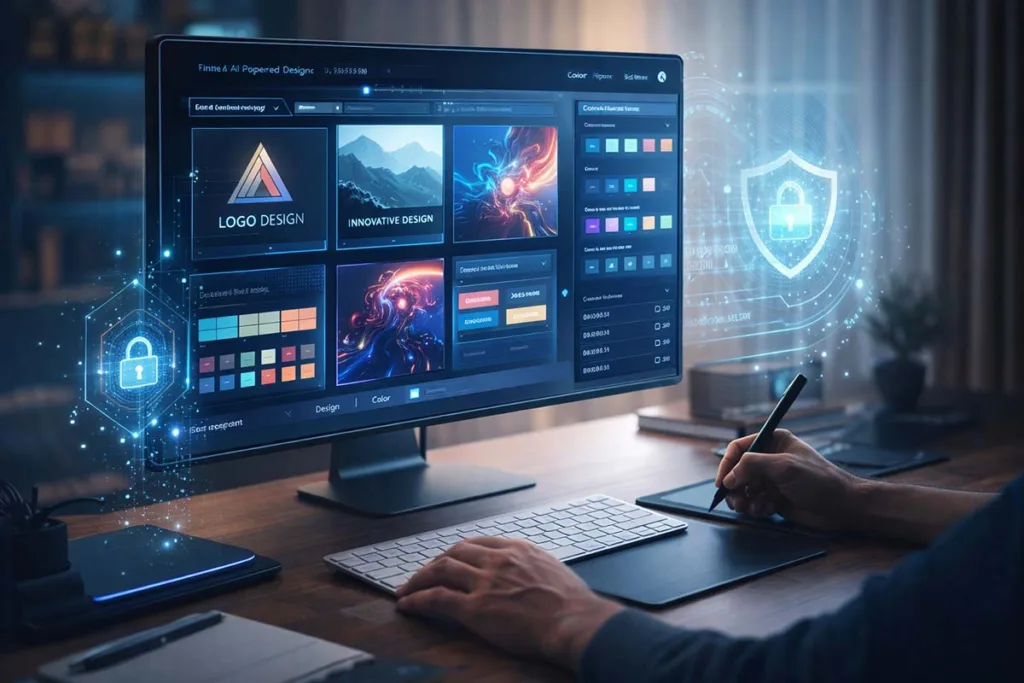

Design work is moving faster than ever. Freelancers, marketers, and business owners now need visuals that look sharp, stay consistent, and remain protected after publishing. That pressure is exactly why interest in AI graphic design GFXRobotection is growing so quickly.
This topic sits at the point where artificial intelligence, graphic design software, and creative protection meet. It is not just about making graphics faster. It is also about keeping digital assets safer in a world shaped by automation, content reuse, and AI-generated media.
What Is AI Graphic Design GFXRobotection?
At its core, AI graphic design GFXRobotection describes a design approach that blends smart visual creation with built-in protection. Instead of relying only on manual tools, it uses machine learning, prompt-based generation, and automated design logic to help users build graphics faster and more efficiently.
The second half of the concept matters just as much. “Robotection” points to features that protect creative output through tracking, digital fingerprints, metadata, and ownership support. That makes it different from standard editing apps.
Key Idea Behind GFXRobotection
The basic idea is simple. A user gives a design request, and the system helps create polished visual assets in less time. At the same time, the output can include signals that support originality and traceability.
This makes graphic design GFXRobotection more than a trendy phrase. It reflects a wider shift in how people think about design. Speed alone is no longer enough. Creators also care about control, proof of ownership, and the long-term value of their work. That is why GFXRobotection AI graphics software stands out in current design discussions.
How AI Graphic Design GFXRobotection Works
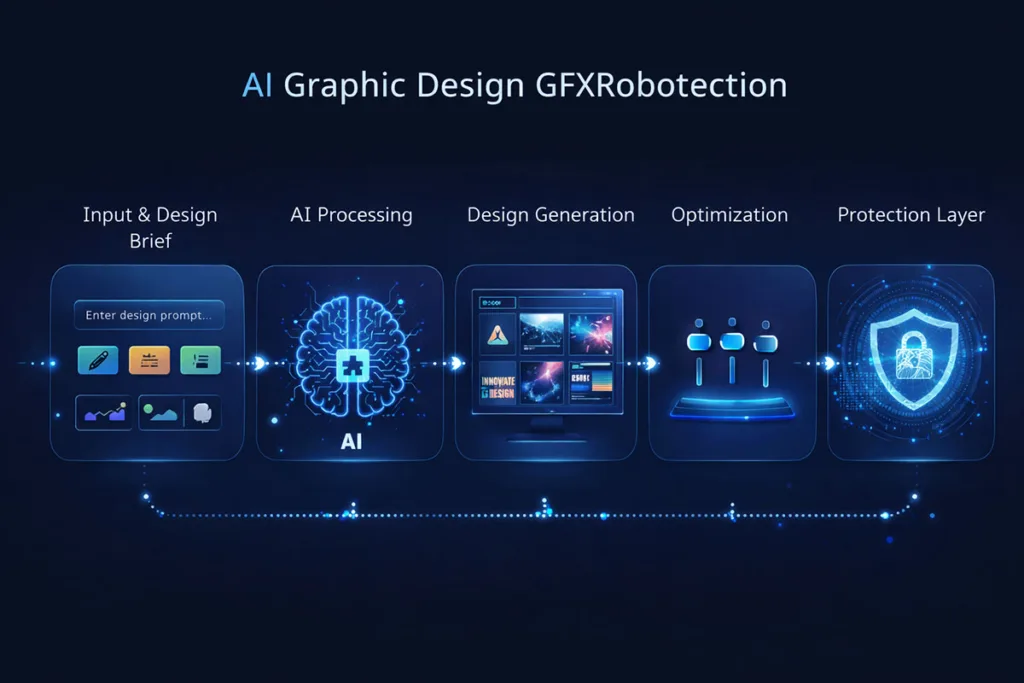
Most people want to know one thing first: how does this actually work in practice? The process is easier to understand when broken into clear stages. Each stage handles a different part of creation, refinement, and protection.
Instead of starting from a blank canvas, users work with a guided flow. That saves time and reduces decision fatigue.
Step 1 – Input & Design Brief
The process starts with user input. This may include a topic, style, color palette, mood, brand tone, or graphic type. Some systems also accept text prompts, sample references, or preset templates.
This stage matters because the AI needs direction. A stronger brief usually leads to sharper results.
Step 2 – AI Layout & Style Generation
Next, the engine studies the request and turns it into structure. It can suggest layouts, font pairings, spacing, and color harmony based on design rules and learned patterns.
This is where graphic design software GFXRobotection saves serious time. Users do not need to test dozens of versions manually.
Step 3 – Automated Design Output
After processing, the tool generates one or more visual drafts. These outputs may include social posts, banners, ads, logos, or branded graphics.
Instead of getting one fixed option, users often receive multiple directions. That makes review faster and editing easier.
Step 4 – Smart Optimization
The best tools do not stop at generation. They also improve alignment, contrast, readability, and visual balance. Small fixes can make a design feel far more polished.
These adjustments help beginners create stronger work without advanced technical skill.
Step 5 – Protection Layer Activation
The final stage adds the protection side. This can involve invisible identifiers, file data, or traceable ownership markers.
That extra layer is what gives AI graphic design GFXRobotection its distinct value in a crowded design market.
Key Features of GFXRobotection AI Graphics Software
A strong tool needs more than a flashy interface. It has to solve real problems for real users. The core features below explain why GFXRobotection AI graphics software from GFXMaker keeps attracting attention.
These features serve both speed and usability, which is a major advantage for busy creators.
AI Design Automation
Automation handles repetitive tasks that once took hours. It can build drafts, resize formats, and create variations in seconds.
That helps users move from idea to output much faster.
Smart Layout & Color Suggestions
Many users struggle with composition. AI can recommend cleaner arrangements, stronger contrast, and balanced typography using tested design logic.
That creates more professional-looking results with less trial and error.
Fast Content Generation
Speed is one of the biggest selling points. A creator can produce graphics for Instagram, blog headers, ads, and product visuals in a short session.
This is especially useful for content teams managing high publishing volume.
Built-In Protection Technology
Protection features give this category its unique identity. Systems may include watermark logic, metadata support, or hidden ownership markers.
Those tools help creators defend work in a digital space where copying happens fast.
Beginner-Friendly Interface
Good design software should not intimidate new users. A simple dashboard, drag-and-drop editing, and guided prompts lower the skill barrier.
That makes graphic design software GFXRobotection appealing to freelancers, startups, and non-designers.
Benefits of Using AI Graphic Design GFXRobotection
The value of this approach becomes clearer when you look at daily use. It is not only about making something faster. It is about working smarter, reducing friction, and protecting the final result.
That mix matters for solo creators and growing brands alike.
Faster Design Workflow
AI cuts the time spent on setup, testing, and first drafts. What once took 2 to 3 hours can often be reduced to minutes.
That speed helps teams publish consistently.
Better Design Consistency
Consistency is hard when content volume grows. AI helps maintain similar styling across posts, banners, and brand graphics.
That is useful for businesses trying to build a clear visual identity.
Reduced Skill Barrier
Not everyone is a trained designer. With guided suggestions, users can still build attractive visuals without mastering complex tools.
This is one reason digital craft GFXRobotection is becoming a more relevant idea.
Protection Against Content Theft
Stolen visuals hurt creators. Protection-focused features add a layer of confidence when publishing work online.
That support matters more now than ever.
Scalable for Businesses
Businesses need volume. AI tools make it easier to create campaigns, refresh assets, and support multiple channels without burning time or budget.
Real-World Use Cases of GFXRobotection
A concept only matters if people can use it in real work. That is where this topic becomes practical. The blend of visual automation and content protection fits many modern workflows.
It works especially well in environments where speed, branding, and ownership matter.
Social Media Content Creation
Brands need posts daily. AI can create fast, formatted visuals for multiple platforms while keeping style consistent.
This helps marketers stay active without design bottlenecks.
Branding & Logo Design
Early-stage brands often need quick visual identity work. AI can generate starter concepts, icons, and style directions for review.
That saves time in the discovery phase.
Marketing Campaign Graphics
Ad creatives, display banners, and promotional visuals often need rapid testing. AI speeds up production and makes versioning easier.
That helps performance teams move faster.
Digital Craft & Creative Projects
The idea also fits digital craft GFXRobotection workflows. Artists, makers, and hobby creators can use it for posters, mockups, or visual experiments while keeping ownership support in mind.
AI Graphic Design GFXRobotection vs Traditional Tools
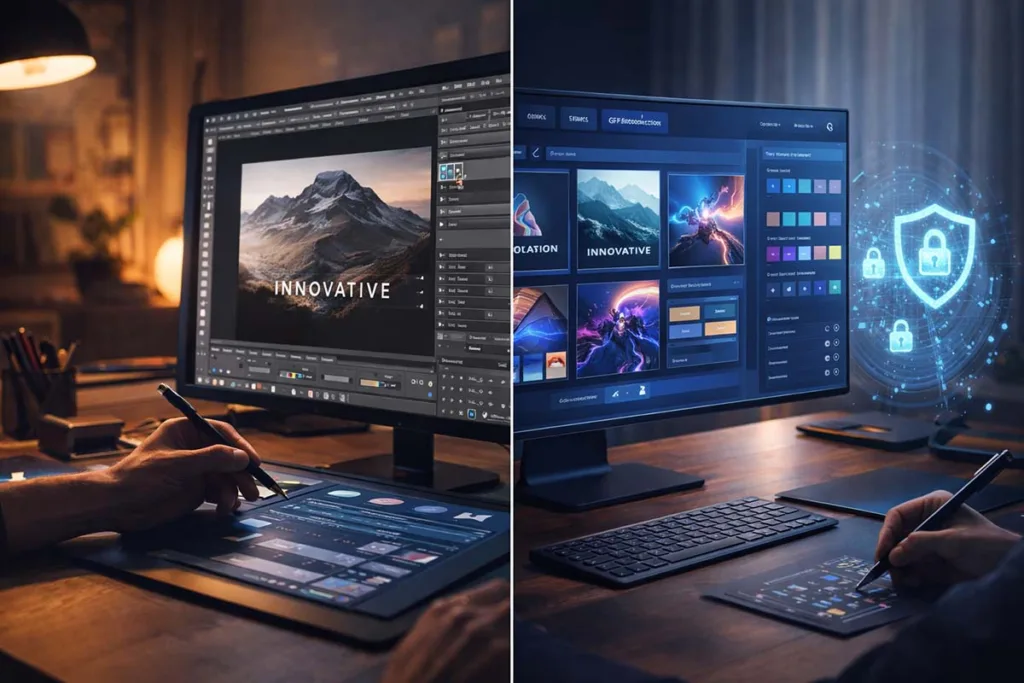
Traditional design tools still have value. They offer deeper control, detailed editing, and stronger room for custom work. But they often demand more time, more skill, and more manual effort.
That is where AI-powered systems change the equation.
Speed Comparison
Traditional tools usually start from scratch. AI tools generate structure much faster, which shortens the early production phase.
For busy teams, that difference is huge.
Cost & Efficiency
Manual production can be expensive when time is limited. AI helps reduce routine effort and supports faster output with smaller teams.
That improves efficiency.
Creativity vs Automation
Human creativity still matters. AI is best seen as support, not a full replacement for original thinking and creative judgment.
The best outcomes are frequently achieved when both collaborate.
Protection Capabilities
This is where the gap widens. Standard tools focus on editing. Graphic design software GFXRobotection adds a stronger focus on traceability and asset security.
Limitations of AI Graphic Design GFXRobotection
No tool is perfect, and honest analysis matters. While AI speeds up production, it can still produce generic-looking work if the prompt or brief is weak.
That means users should not expect magic from one click alone.
Limited Human Creativity Depth
AI can imitate patterns well, but it does not replace taste, intuition, or lived creative experience. Strong brand storytelling still needs human judgment.
Over-Reliance on AI
Users can become too dependent on automation. That may reduce originality if every design follows similar patterns.
Learning Curve for Some Tools
Even simple platforms take time to understand. Users still need to learn prompts, editing flow, and brand control.
The Future of AI Graphic Design GFXRobotection
This space is still growing. Future tools will likely become more personalized, more accurate, and more connected with everyday content workflows. Protection features should also become stronger as digital ownership becomes a bigger concern.
That makes AI graphic design GFXRobotection a useful topic to watch. The future will likely include smarter branding systems, better asset tracking, and tighter links between design, publishing, and content security.
FAQs About AI Graphic Design GFXRobotection
People exploring this topic usually have a few common questions. The answers below clear up confusion and help define where this concept fits in the design world today.
What is AI graphic design GFXRobotection?
It is a design approach that combines AI-powered graphic creation with tools that help protect creative output.
Is GFXRobotection software beginner-friendly?
In many cases, yes. Simple dashboards, templates, and prompt-based flows make it easier for new users.
How does GFXRobotection protect designs?
It may use metadata, hidden identifiers, or ownership-related signals to support traceability and protection.
Can AI replace graphic designers?
No. It can speed up work, but human strategy, taste, and originality still matter.
Is GFXMaker AI software worth trying?
It can be useful for creators who want faster production and a stronger protection-focused workflow.
Final Thoughts
The appeal of this topic is clear. Creators want speed, quality, and safety in one workflow. That is exactly why interest in AI graphic design GFXRobotection keeps building across design, branding, and marketing spaces. It is not just another software trend. It reflects a bigger change in digital creation. As AI tools become more common, the need to protect original work will only grow. The future belongs to systems that help people create faster without giving up control of what they make.
For more insightful articles, please visit Techroyall.